Executive Summary
The panel discussion centered on the evolving landscape of longevity, emphasizing the shift from viewing it as a luxury to recognizing its economic and health system imperative. Panelists highlighted the transformative roles of AI and genomics in enabling precision medicine, preventative care, and personalized health strategies. A key theme was the importance of focusing on healthspan—the quality of life during extended years—rather than merely extending lifespan. The discussion underscored the necessity of a systemic approach, involving collaboration between governments, payers, providers, researchers, and the public, to effectively address longevity. Panelists identified several bottlenecks hindering the widespread adoption of AI-powered solutions, including limited data access, regulatory hurdles, and gaps in disease understanding. They stressed the critical need to build trust in institutions and science, combat misinformation, and promote health literacy. The conversation also touched upon the ethical considerations and potential inequalities associated with access to longevity technologies. Ultimately, the panel advocated for a future where AI and genomics are leveraged to empower individuals to proactively manage their health, promoting well-being and resilience throughout their lives, while also addressing the economic and societal challenges of an aging population. The panelists shared personal anecdotes and strategies they employ to enhance their own longevity, emphasizing the importance of data-driven insights, lifestyle modifications, and cognitive engagement.
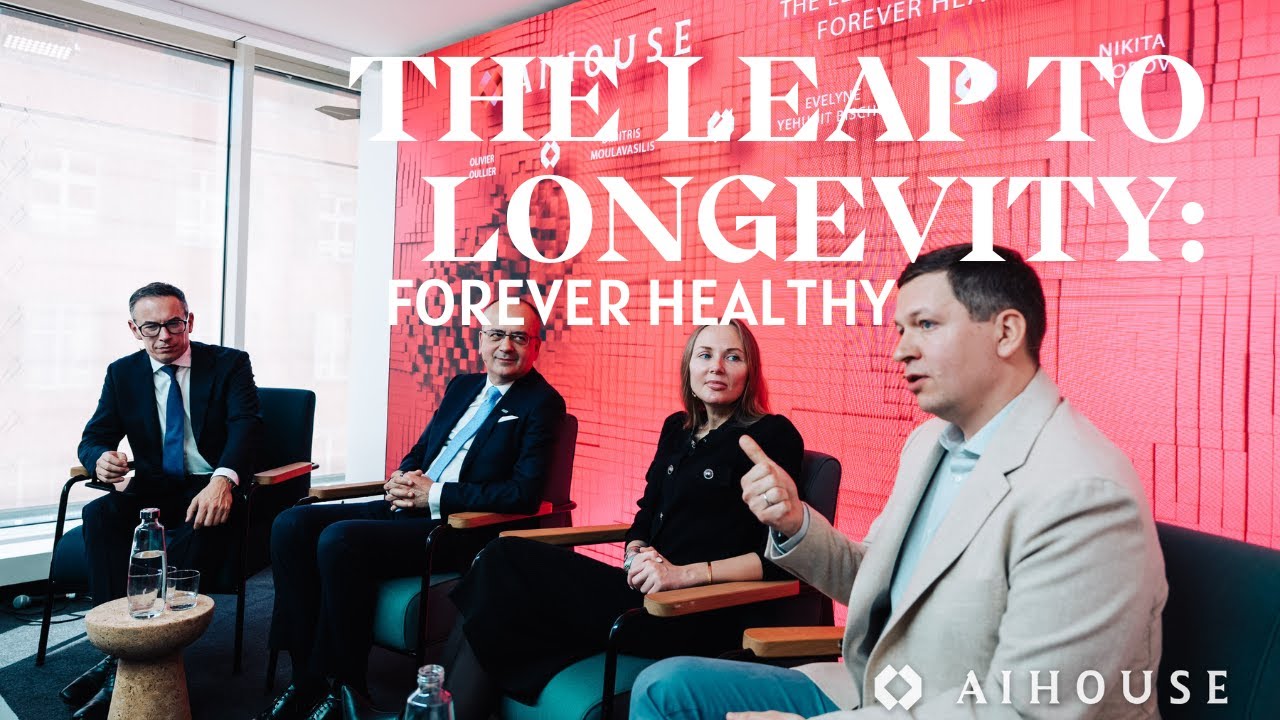
Panelists
- Healthy longevity medicine aims to keep optimal healthspan at each stage of life, targeting mechanisms of aging.
- It's not about life extension or biohacking, but about optimizing physical and cognitive health.
- Longitudinal data is crucial for precision approaches.
- Healthy longevity medicine is not only for the wealthy; healthcare insurance can include it.
- AI and genomics are already changing prevention, prediction, and treatment.
- AI can be used to identify drug targets by comparing genetic data sets of healthy and unhealthy individuals.
- AI can design keys (drugs) to fit protein locks (disease targets).
- Novartis has a dedicated area of aging and regeneration.
- Longevity has shifted from a luxury to a health systems and economic imperative.
- Scientific breakthroughs, advanced digital infrastructures, and population genomic programs are converging to expand healthspan.
- M42 offers services at the health, population health, and national health system levels.
- Genomics and AI are the founding stones for converting episodic reactive treatment care to preventive, predictive, and personalized care.
Main Discussion Points
- The shift of longevity from a luxury to an economic and health system imperative.
- The role of AI and genomics in precision medicine and preventative care.
- The importance of healthspan versus lifespan.
- Systemic approaches to longevity involving governments, payers, providers, and researchers.
- Addressing the economic accessibility of longevity medicine.
- Bottlenecks in AI adoption for healthcare, including data access, regulation, and disease understanding.
- The need for increased trust in institutions and science.
- The role of lifestyle and behavioral changes in longevity.
- The importance of data collection and analysis for personalized health recommendations.
Key Insights
✓ Consensus Points
- The importance of focusing on healthspan rather than just lifespan.
- The transformative potential of AI and genomics in healthcare.
- The need for a systemic approach to longevity involving multiple stakeholders.
- The importance of addressing the economic accessibility of longevity medicine.
- The need for increased trust in institutions and science.
- The importance of data collection and analysis for personalized health recommendations.
- The importance of collaboration between academia, healthcare systems, and pharmaceutical companies.
⚡ Controversial Points
- The use of the word 'forever' in the context of health and longevity, with Evelyne Bischof stating it's not the right word and the goal is not immortality.
- The level of trust in AI, with Dimitris Moulavasilis highlighting the high trust in the UAE compared to Europe.
🔮 Future Outlook
- Increased use of AI in disease prediction, prevention, and personalized treatment.
- More countries investing in health information exchange systems and population genomic programs.
- A shift towards prevention-first care models.
- Cheaper and more accessible technologies for longevity medicine.
- Greater focus on precision therapies that target specific disease mechanisms.
- Potential for leapfrogging traditional healthcare models by investing in data infrastructure.
💡 Novel Insights
- The idea of Abu Dhabi's vision being not just adding years to life, but adding life to years.
- The concept of pre-estational health interventions.
- The use of wastewater tracking to predict diseases.
- The idea of using AI to analyze data from wearables and provide personalized recommendations for diet and exercise.
- The need to move into public private and people partnership in order to be able to scale things (PPP PPP).