Executive Summary
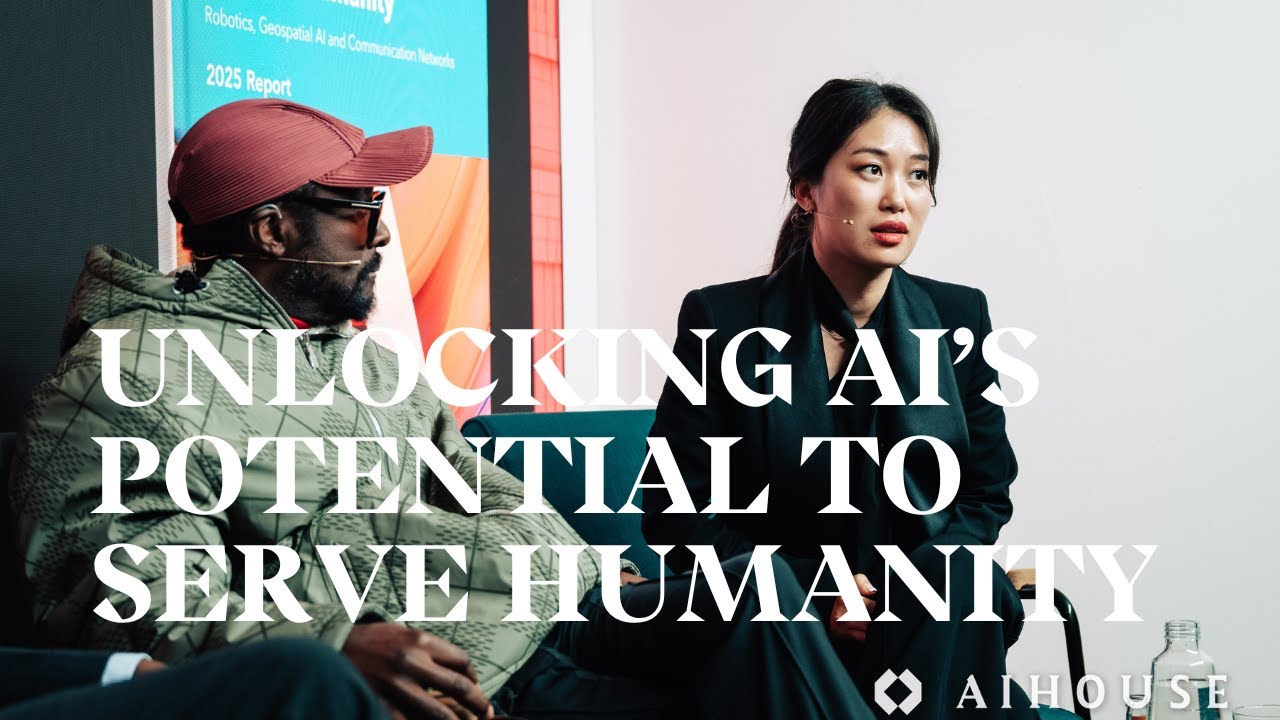
The panel discussion centered on unlocking AI's potential to serve humanity, with a strong emphasis on AI literacy, equitable access, and the future of work. Panelists highlighted the importance of addressing the political economy of data access, ensuring AI is individualized to understand diverse cultural backgrounds, and developing AI literacy standards. A key theme was the concept of the 'agentic self,' empowering individuals to build their own AI agents to combat potential job displacement. The discussion also touched on the ethical considerations of AI, the need for empathy and human connection, and the development of sovereign AI solutions tailored to local needs. Panelists agreed that AI literacy and education are crucial for ensuring that AI benefits humanity and that the current education system needs to adapt to the skills required by the job market. They also acknowledged the potential for AI to replace jobs and the need for humans to adapt. The discussion explored future scenarios, including the emergence of AI-powered labs in homes and the increasing ability of AI to predict human behavior. While there were some differing views on the approach to equitable access and the need for AI licenses, there was a consensus that AI should be seen as a tool, not a decision-maker in people's lives, and that the human dimension, including empathy and ethical considerations, is paramount.
Panelists
- AI education is crucial across developing countries to avoid leaving behind a significant portion of the world's population.
- Technology should be evaluated by its impact, not just its advancement.
- Diversity needs to be embedded into AI design to address biases and cultural differences.
- AI tutors can bridge the education gap in remote communities.
- The political economy of data access is a serious limitation.
- AI literacy standards are not well-defined.
- AI needs to be individualized to understand people from different cultural backgrounds and languages.
- Disease profile data sets for AI in medicine must come from the community to be effective and avoid undermining human rights.
- There's a gap in AI engagement, especially in becoming builders, tuners, and trainers of models, not just consumers.
- Communities should tune models specific to their needs for problem-solving.
- The focus should be on humans building their own 'agentic self' to combat mass joblessness due to AI.
- Humans need to develop empathy and be better to one another before AI can be effectively and ethically used.
Main Discussion Points
- The benefits and constraints of AI, particularly in developing countries.
- The importance of AI literacy and skilling, and how to address the gaps.
- The concept of the 'agentic self' and empowering individuals to build their own AI agents.
- Creating AI education pathways and the role of various stakeholders.
- Equitable access to AI and ensuring no one is left behind.
- The potential for AI to replace jobs and the need for humans to adapt.
- The importance of empathy and human connection in an AI-driven world.
- The development of sovereign AI and local solutions.
- The ethical use of AI and the need for safety and security measures.
- The potential of AI tutors to bridge the education gap.
Key Insights
✓ Consensus Points
- AI literacy and education are crucial for ensuring that AI benefits humanity.
- Equitable access to AI is essential to avoid further inequalities.
- The human dimension, including empathy and ethical considerations, is paramount.
- The current education system needs to adapt to the skills required by the job market in an AI-driven world.
- AI should be seen as a tool, not a decision-maker in people's lives.
⚡ Controversial Points
- Whether the approach to equitable access should be sequential or simultaneous.
- The extent to which AI will replace jobs and the potential consequences for aggregate demand.
- Whether AI licenses are needed to regulate the use of AI.
🔮 Future Outlook
- Mass joblessness due to AI and the need for humans to build their own agents.
- Robots walking amongst us and the need to grapple with their rights and potential for identity theft.
- The emergence of alpha fold type labs in homes providing designer medicine.
- The increasing ability of AI to predict human behavior and the need for data security.
- The potential for AI to replace a significant percentage of jobs by 2030.
- The need for universities to adapt to the emerging economy and promote small-scale manufacturing.
💡 Novel Insights
- The concept of the 'agentic self' and empowering individuals to build their own AI agents.
- The idea of humans needing to 'hunker down' like during COVID-19 to address the challenges of AI.
- The analogy of AI development to video game consoles (Pac-Man, Nintendo, PlayStation) to illustrate the rapid pace of change.
- The idea of AI having a 'lived experience' and the implications for data privacy.
- The need for humans to develop empathy and be better to one another before AI can be effectively and ethically used.
- The use of AI tutors to bridge the education gap in remote communities.