Executive Summary
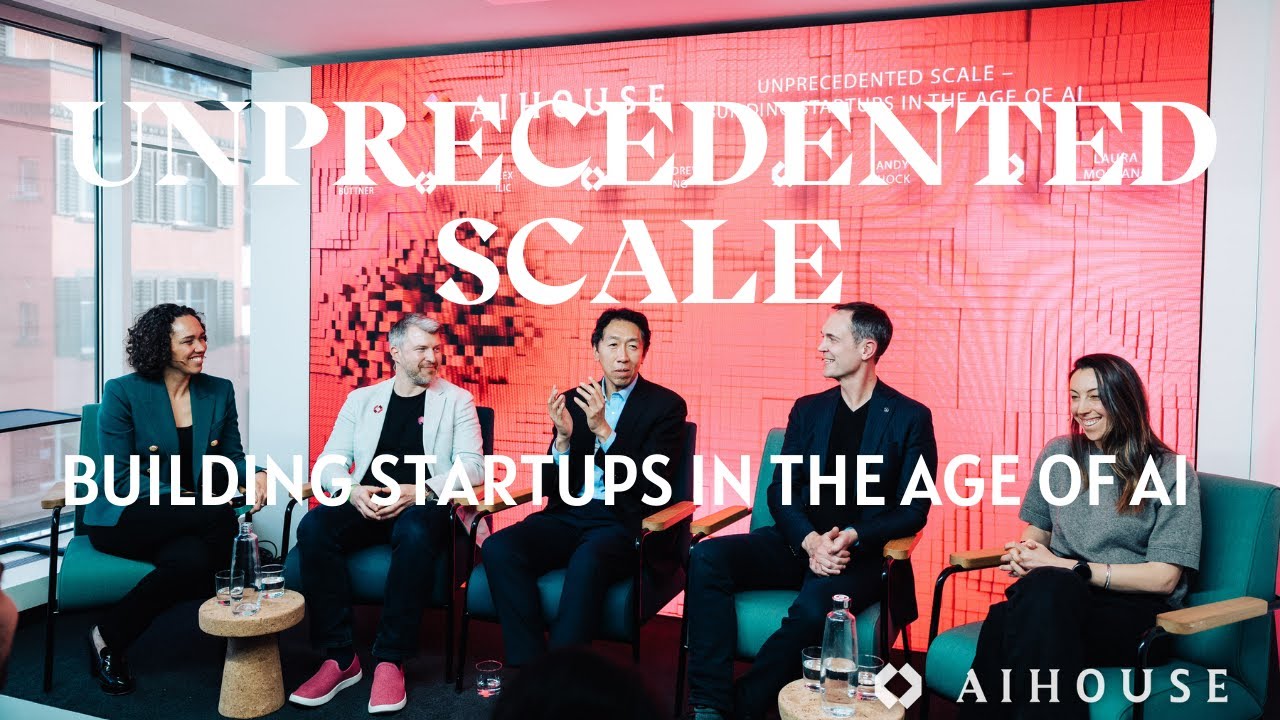
The panel discussion centered on the unprecedented scale of building startups in the age of AI, emphasizing the rapid acceleration of development and deployment. Panelists highlighted the importance of focusing on end-user value, building AI solutions that address specific problems, and redesigning workflows for transformative change. The European startup ecosystem was recognized for its growing competitiveness and technical talent. A key theme was the need for technical skills across all roles in a company, and the shift from an attention-based economy to one focused on understanding user intentions. The panelists discussed the importance of fast iteration and experimentation, with hypothesis generation becoming a bottleneck as building becomes cheaper. They also touched on the value of AI in various sectors beyond enterprise, such as science, healthcare, and material science. Differing views emerged regarding the optimal team structure and the potential downsides of AI-driven automation. However, there was consensus on the importance of end-user value, workflow redesign, technical talent, and fast iteration. The panelists predicted continued acceleration, a shift in economic focus, and growing AI applications in diverse sectors. Novel insights included collapsing product management and engineering roles, switching from stealing attention to finding intention, and Andrew Ng's hierarchy of coding skills. The overall message was one of optimism and encouragement to build and test ideas responsibly, given the rapidly decreasing cost of building and the vast potential of AI to transform industries and improve lives.
Panelists
- Focus on educating the next generation differently, emphasizing hands-on experience with large-scale AI models.
- Argues that the majority of the current AI wave is still to come, with AI-native business models yet to be fully realized.
- Stresses the importance of aligning business models with outcomes, rather than simply focusing on token generation or workflow execution.
- Believes traditional companies need to focus on young talent and startups with outcome-aligned business models to scale AI quickly.
- Highlights the need for deeper workflow redesign in businesses to achieve transformative change with AI, rather than just incremental efficiency gains.
- Suggests that AI should be used to either do things faster or do them 100 times more, driving growth beyond cost savings.
- Advocates for hiring individuals with coding skills across all roles in a company, emphasizing the increased productivity of technical employees.
- Argues that hypothesis generation is becoming the bottleneck as building becomes cheaper and faster.
- Emphasizes building for end-user value, starting from the application and working backwards.
- Highlights the growing demand for high-speed inference in applications like voice assistants and reasoning models.
- Argues that easy access to the latest resources, including models and compute, changes not just how you build, but what you build.
- Believes ultra-fast inference enables fundamentally new applications in agentic workflows.
- Focuses on the ambition and technical talent in the European startup ecosystem, highlighting its growing competitiveness at the global level.
- Advises startups to focus on the final outcome and impacting the top or bottom line, rather than just replacing individual components with AI solutions.
- Suggests enterprises should work with startups to learn from their obsessive focus on problems and their ability to transfer learnings across different organizations.
- Emphasizes the importance of being technical across every role in a startup, including sales and business development.
Main Discussion Points
- The rapid acceleration of AI development and deployment, with time to value collapsing from weeks to days.
- The importance of focusing on end-user value and building AI solutions that address specific problems.
- The need for deeper workflow redesign in businesses to achieve transformative change with AI.
- The growing competitiveness of the European startup ecosystem in AI.
- The importance of technical talent and coding skills across all roles in a company.
- The shift from an attention-based economy to one focused on understanding and fulfilling user intentions.
- The importance of fast iteration and experimentation in building successful AI products.
- The bottleneck of hypothesis generation as building becomes cheaper and faster.
- The importance of distribution and storytelling in getting AI products into users' hands.
- The value of AI in various sectors beyond enterprise, such as science, healthcare, and material science.
Key Insights
✓ Consensus Points
- The panelists agreed on the importance of focusing on end-user value and building AI solutions that address specific problems.
- There was consensus on the need for deeper workflow redesign in businesses to achieve transformative change with AI.
- The panelists agreed on the importance of technical talent and coding skills across all roles in a company.
- There was consensus on the importance of fast iteration and experimentation in building successful AI products.
⚡ Controversial Points
- The discussion touched on the potential downsides of AI-driven automation, with concerns raised about job displacement and the need for upskilling.
- There were differing views on the optimal team structure for AI development, with some advocating for specialized roles and others for collapsing roles into one person.
🔮 Future Outlook
- The panelists predicted a continued acceleration of AI development and deployment, with even faster time to value in the future.
- They anticipated a shift from an attention-based economy to one focused on understanding and fulfilling user intentions.
- They predicted a growing importance of AI in various sectors beyond enterprise, such as science, healthcare, and material science.
- There was an expectation that AI-native business models would become more prevalent and sophisticated.
- A future where individuals have their own personal AIs that communicate with others.
💡 Novel Insights
- The idea of collapsing product management and engineering roles into one person to increase velocity.
- The concept of switching from stealing attention to finding intention in AI application design.
- Andrew Ng's hierarchy of coding skills, highlighting the value of experienced engineers who are also proficient in AI tools.
- The observation that hypothesis generation is becoming the bottleneck as building becomes cheaper and faster.