Executive Summary
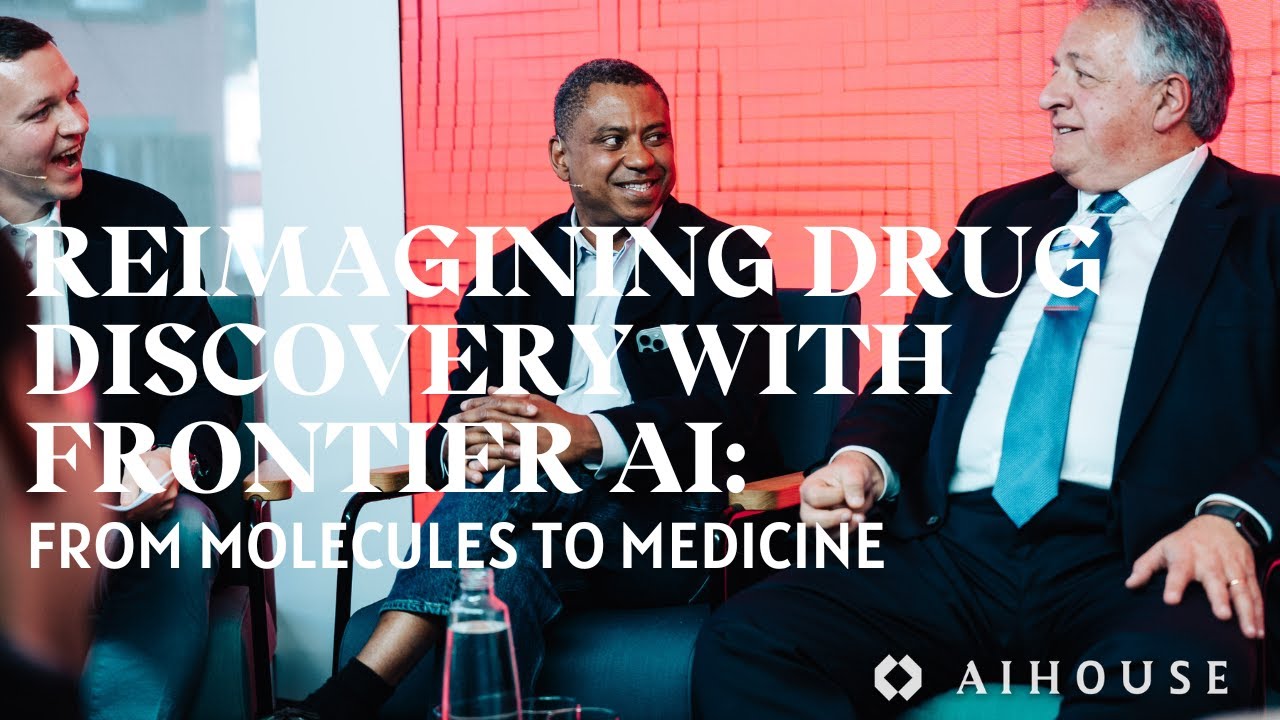
The panel, comprised of experts from academia, biotech, pharma, and venture capital, explored the transformative potential of AI in drug discovery. The discussion centered on the current state of AI, differentiating between hype and tangible results, and identifying key bottlenecks hindering progress. Panelists agreed on the importance of data, particularly clinical data, and the necessity of wet lab validation for AI-generated hypotheses. A key debate emerged around the role of humans in the loop, with some advocating for greater autonomy for AI systems and others emphasizing the continued need for human expertise and intuition. The panel also discussed the importance of partnerships and collaboration between different stakeholders to accelerate innovation. Looking ahead, panelists offered predictions for the future of AI in drug discovery, including the emergence of AI-driven clinical trials, the discovery of novel biology, and the potential to cure diseases like Alzheimer's, Huntington's, and sickle cell anemia. A novel concept of 'poly-intelligence' was introduced, emphasizing the need to integrate human, nature, and machine intelligence. The panel also highlighted the importance of a 'biotech bio' approach, where tech is used in the middle of biology, not before or after. While acknowledging the challenges and potential pitfalls, the panelists expressed optimism about the future of AI in drug discovery and its potential to revolutionize medicine.
Panelists
- AI can accelerate and derisk drug development by pairing AI drug discovery with AI-guided clinical trials.
- The biggest bottleneck is sociological, not technical, medical, or legal.
- Nightingale AI is a large health model that reasons over medical data, not just language.
- Using AI to identify repurposable drugs by reasoning about patient trajectories and unexpected benefits.
- Generative causal AI is revealing novel human biology, citing discoveries in Huntington's disease.
- The bottleneck is clinical validation and acceptance of machine-driven discoveries.
- Lack of understanding of human biology (only 5% known) is a major impediment to AI transforming drug discovery.
- Causal AI can reverse engineer the hidden 95% of disease circuitry using multiomic data from humans.
- Humans have limited comprehension and language for understanding complex biological systems.
- Nature itself possesses multiple forms of intelligence, including cellular intelligence.
- Humans should leverage machine intelligence and nature's intelligence to improve human lives (poly-intelligence).
- The problem is with humans and their reluctance to believe there's another way to do science.
- AI is helping to deeply understand diseases and form hypotheses for new drug discovery, particularly in kidney disease (ADPKD).
- AI identified five hits validated in an ADPKD model, which are now going into the portfolio.
- AI should be focused on doing things that couldn't be done before, not just for the sake of AI.
- Clinical data is crucial, especially data taken directly from patients.
Main Discussion Points
- The role of AI in reimagining drug discovery, from molecules to medicine.
- The current state of AI in drug discovery: what's real vs. hype.
- Examples of tangible outcomes and decisions driven by AI in research.
- Bottlenecks preventing faster progress in AI-driven drug discovery.
- The importance of understanding biology and how AI can help.
- The role of data, models, and lab automation in driving progress.
- The need for partnerships and collaboration models.
- The future of AI in drug discovery and predictions for 2026 and 2027.
- Diseases that could be solved in the next decade with AI.
Key Insights
✓ Consensus Points
- The importance of wet lab validation for AI-generated hypotheses.
- The need to focus AI efforts on areas where it can do things that humans cannot.
- The importance of data, especially clinical data, for training AI models.
- The need for partnerships and collaboration between academia, biotech, pharma, and regulators.
- The potential of AI to accelerate drug discovery and development.
- The importance of addressing sociological barriers to AI adoption.
⚡ Controversial Points
- Whether AI is truly solving problems or just being used for the sake of using AI.
- The extent to which humans should be in the loop in AI-driven scientific discovery.
- The role of high-throughput screening and big data vs. focused, targeted approaches.
- The best type of AI model for solving fundamental scientific problems (LLMs vs. causal AI).
- The value of synthetic data vs. real-world data.
- The degree to which computer models can replace traditional clinical trials.
🔮 Future Outlook
- In 2025, generative causal AI will reveal novel human biology.
- In the next 3-10 years, AI-driven computer models of human disease will be accurate enough to be relied upon by regulators.
- By 2027, there will be AI-generated targeted trials with selective patient populations.
- By 2027, there will be compounds truly discovered by generative AI in the clinic.
- Cloud-based labs will enable innovation without physical lab spaces.
- Predictions of curing Alzheimer's, Huntington's, pancreatic cancer, and sickle cell anemia in the next decade.
- AI systems that integrate human knowledge and inference to formulate new drugs will be in trials at a much faster pace.
💡 Novel Insights
- The concept of 'poly-intelligence' - the juxtaposition of human, nature, and machine intelligence.
- The idea that cells possess a form of intelligence.
- The notion that AI can emulate, influence, and direct positive outcomes from nature, even if we don't fully understand it.
- The idea of 'biotech bio' - using tech in the middle of biology, not before or after.
- Using AI to identify repurposable drugs by reasoning about patient trajectories and unexpected benefits.
- The potential for AI to discover biology that leads to completely breakthrough understandings.