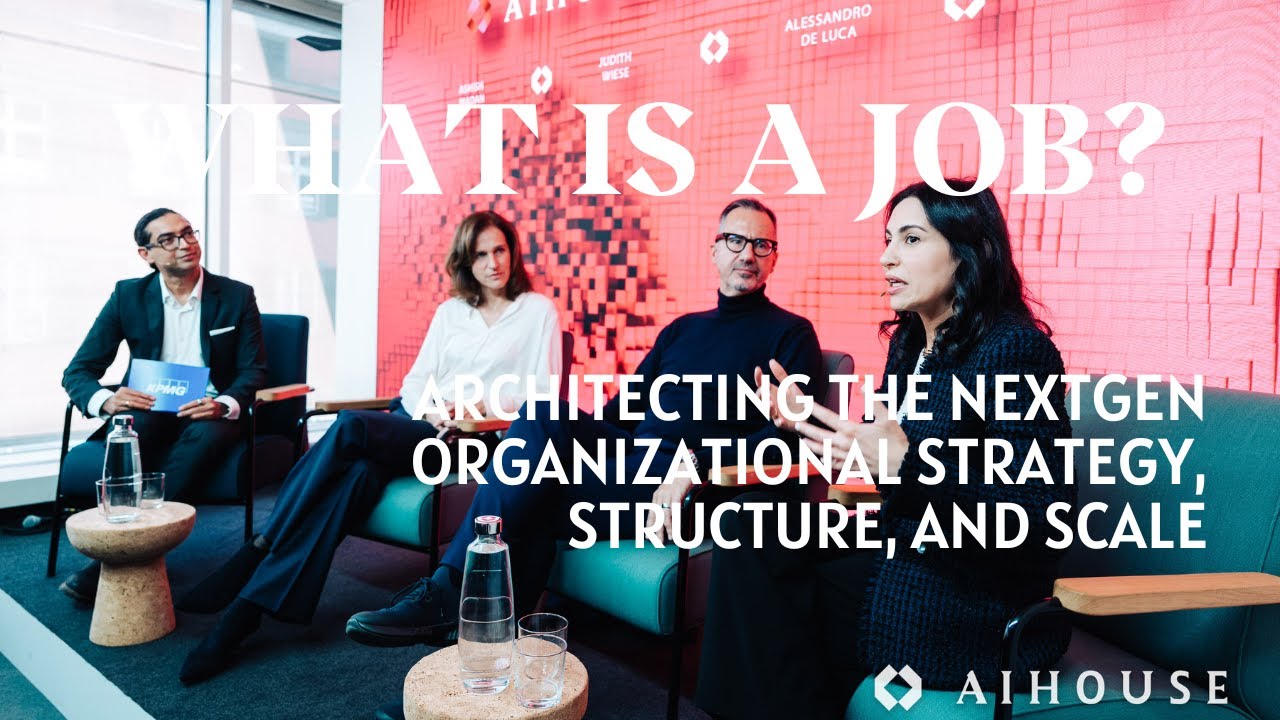
Executive Summary
The panel discussion centered on the transformative impact of AI on the definition of jobs, organizational structures, and the future of work. Panelists explored the shift from task-based roles to outcome-based responsibilities, emphasizing the need for companies to embrace new organizational models that foster collaboration and agility. A key debate revolved around the extent to which AI will displace human workers versus augment their capabilities, with panelists acknowledging the psychological impact of AI on employees and the importance of fostering a growth mindset. The discussion also highlighted the ethical considerations and governance challenges associated with AI implementation, emphasizing the need for responsible development and deployment. Consensus emerged around the importance of people and technology working together to drive business outcomes, the value of foundational skills like learning agility and critical thinking, and the potential of AI to democratize knowledge and enhance social aspects of ESG. Panelists offered futuristic outlooks, predicting that AI will enable personalized medicine, transform product design, and even allow people to interface with AI agents through thought. A novel insight was the concept of 'zero-based process design,' urging companies to reimagine business processes from the ground up using AGI. The panel concluded with a call for responsible AI development and a commitment to leveraging its potential for positive social impact.
Panelists
- Jobs are transitioning from task-based activities to outcome-based responsibilities.
- Companies need to embrace new organizational structures that facilitate collaboration and agility.
- Organizations should adopt a 'zero-based process design' approach to leverage the capabilities of AGI.
- Democratization of context is essential for empowering employees and enabling informed decision-making.
- Digital transformation should be a joint effort between people and technology, focusing on business outcomes.
- A new operating model is needed to accommodate the hybrid configuration of agentic AI and human workforce.
- Master data management is crucial for successful AI implementation.
- The ability to challenge the status quo and adapt to change is a key skill for driving transformation.
- AI presents both opportunities and risks, requiring careful consideration of its impact on the nature of work and the role of humans.
- The 'reskilling paradox' highlights the need to address employee distrust and ensure that AI investments are perceived as enablers rather than threats.
- Companies should focus on developing foundational skills like learning agility, critical thinking, and adaptability to change.
- Leadership needs to foster psychological safety and a growth mindset to encourage experimentation and innovation.
Main Discussion Points
- Defining the role of AI agents in decision-making processes.
- The shift from task-based jobs to outcome-based responsibilities.
- The need for new organizational structures that support collaboration and agility.
- The importance of reskilling and upskilling the workforce to adapt to AI-driven changes.
- Addressing the psychological impact of AI on employees and fostering a growth mindset.
- The role of AI in promoting social inclusion and accessibility.
- The ethical considerations and governance challenges associated with AI implementation.
Key Insights
✓ Consensus Points
- The importance of people and technology working together to drive business outcomes.
- The need for a new operating model that accommodates the hybrid configuration of agentic AI and human workforce.
- The value of foundational skills like learning agility, critical thinking, and adaptability.
- The potential of AI to democratize knowledge and enhance social aspects of ESG.
- The importance of ethical governance and bias mitigation in AI implementation.
⚡ Controversial Points
- The extent to which AI will displace human workers versus augment their capabilities.
- The speed at which companies should adopt AI and transform their organizations.
- The balance between job security and employability in the age of AI.
🔮 Future Outlook
- In 10 years, people will be able to interface with AI agents simply by thinking about them.
- Personalized, predictive, and preventive medicine will become a reality in the next 5 years.
- AI will help design products differently, considering process, sustainability, and circularity.
- AI will address demographic shortages on labor and enable more resource-efficient and circular processes.
💡 Novel Insights
- The concept of 'zero-based process design' as a way to reimagine business processes from the ground up using AGI.
- The idea of a 'context management system' as the new CMS, focused on encoding and managing organizational knowledge for AI agents.
- The notion of 'revolving door strategy' where companies design a modular architecture to adapt to fast changing technology.