Executive Summary
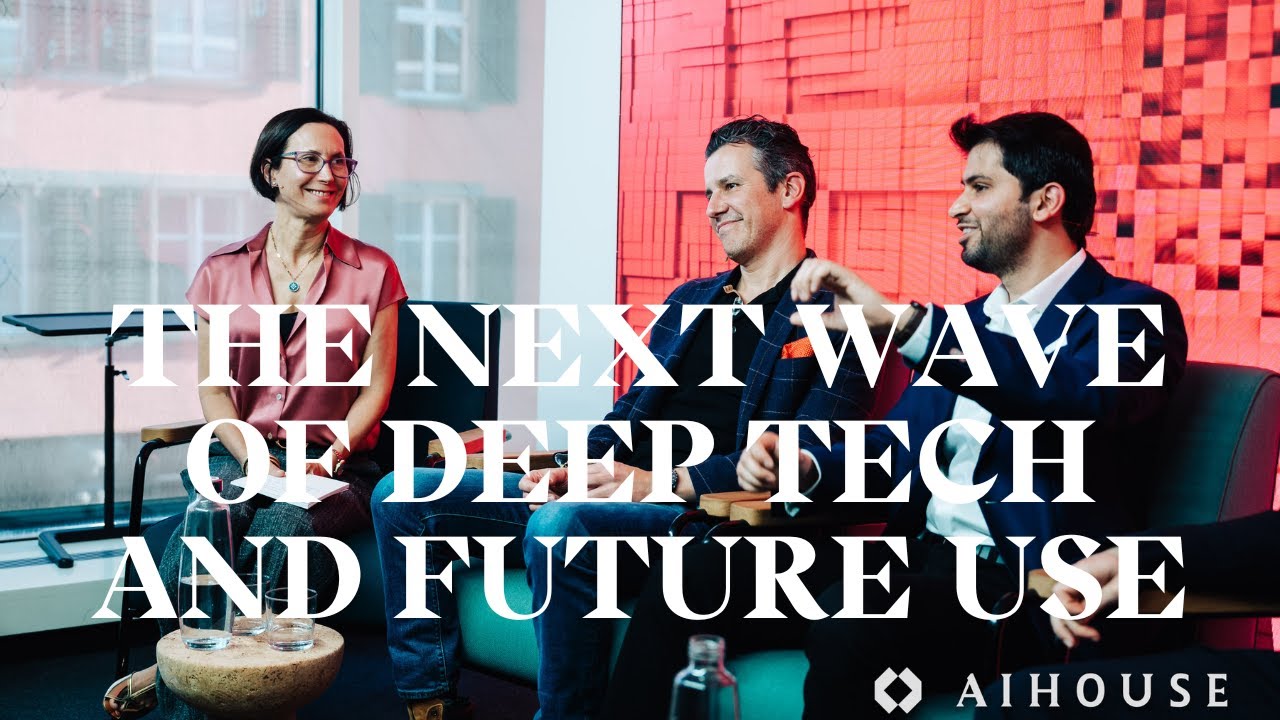
The panel discussion centered on the future of AI and deep tech, moving beyond the current hype surrounding Large Language Models (LLMs). While panelists agreed that LLMs have demonstrated the potential of AI and opened up new possibilities, they also highlighted limitations, particularly the lack of real-world data and the inability to capture tacit human knowledge. A key theme was the importance of focusing on real-world applications and building sustainable business models, rather than solely pursuing theoretical research. Deepak Pathak emphasized the challenges of data scarcity in robotics and the need for innovative approaches to data collection, such as using human videos and simulation. Andrey Khusid discussed Miro's evolution towards 'team intelligence,' where AI facilitates collaboration and breaks down silos within organizations. Nal Kalchbrenner highlighted the need to incorporate advanced laws of the physical world into AI models to drive breakthroughs in fields like medicine and technology. Adrian Locher stressed that the real value lies in building applications on top of the infrastructure, drawing parallels to the internet and cloud computing. The panelists generally agreed that the future of AI lies in creating tangible value for customers and solving real-world problems, rather than simply focusing on technological advancements.
Panelists
- LLMs are laying the ground for much more to be built on top, and that's where attention should be focused.
- Real-world impact and building new business models are key for AI company success.
- Exponential innovation is driven by technologies that enable things not previously possible.
- Once people stop talking about the technology itself, it's usually a sign that it's becoming integrated and impactful.
- Miro is evolving from individual/collaborative brainstorms to brainstorms with LLMs.
- Focusing on 'team intelligence' and how AI can become a team player, not just an individual assistant.
- AI can help break down silos in companies and improve teamwork.
- Companies need to deeply partner with customers and develop solutions together, rather than just providing software.
- Skild AI is building a general-purpose brain for robotics, similar to how OpenAI's GPT is for language.
- LLMs have shown that with enough data, models can be trained to represent data well and automate previously unautomatable tasks.
- The biggest challenge for AI in robotics is the lack of data compared to language or images.
- Robotics requires innovation in leveraging alternate sources of data like human videos and simulation.
- LLMs continue to showcase unique capabilities and progress is not slowing down.
- LLMs are still an abstract model of reasoning, creating a gap between user expectations and outcomes.
- A significant limitation of LLMs is the lack of capture of human intelligence and know-how that is not written on the internet, especially perceptual knowledge.
- Generational expertise that humans have built over decades or centuries will remain a unique human expertise for a while.
Main Discussion Points
- Whether LLMs are at their peak or just the beginning.
- What comes next after LLMs in AI and deep tech.
- The importance of real-world applications and impact versus theoretical research.
- The challenges of data scarcity in robotics and alternative data sources.
- How AI can be applied to teamwork and collaboration, not just individual productivity.
- The competition for talent in the AI field and how companies are attracting and retaining employees.
- The role of simulation and synthetic data in training AI models.
Key Insights
✓ Consensus Points
- LLMs have demonstrated the potential to automate tasks previously thought impossible.
- Real-world data and deployment are crucial for the advancement of AI, especially in robotics.
- Focusing on the application layer and creating value for customers is key for AI company success.
- There is a need to capture knowledge and expertise that is not currently available in digital form.
⚡ Controversial Points
- The extent to which LLMs are currently limited and whether progress is slowing down.
- Whether a generalistic or verticalized approach is superior for robotics development.
🔮 Future Outlook
- AI will increasingly be integrated into teamwork and collaboration.
- Robots will become more prevalent in semi-public spaces like hospitals and hotels before entering homes.
- Simulation and synthetic data will play an increasing role in training AI models.
- There will be a shift from focusing on technology to focusing on applications and business models.
- A focus on physics and nuclear fusion as areas of future development.
💡 Novel Insights
- The concept of 'team intelligence' and how AI can facilitate teamwork.
- The idea of using canvas as a prompt for LLMs, capturing different modalities of information.
- The distinction between free space motion and interacting with the environment in robotics.
- The importance of focusing on seemingly 'easy' tasks for humans, like climbing stairs, to develop general intelligence in robots.
- The concept of 'semi-structured' environments as ideal testing grounds for robotics before deploying in unstructured homes.