Executive Summary
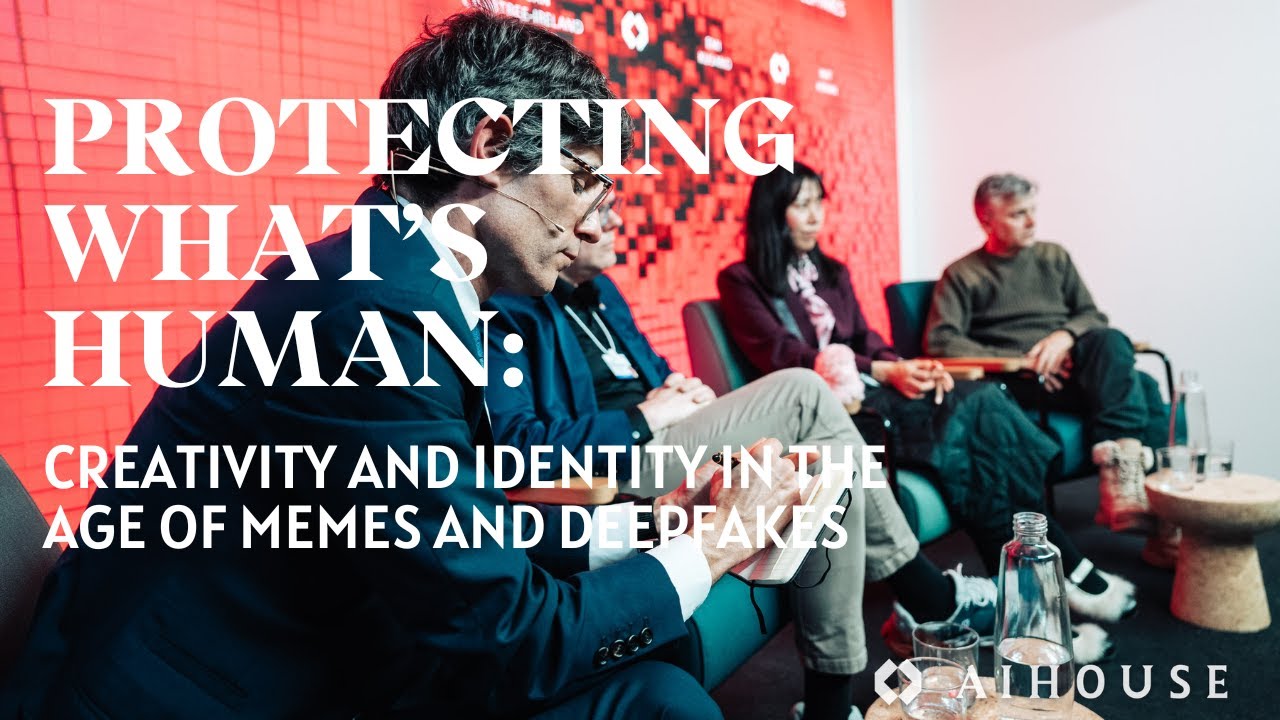
The panel discussion centered on the complex interplay between AI, creativity, and identity, particularly in the context of deepfakes and synthetic media. Panelists explored the ethical, legal, and societal implications of AI's increasing ability to replicate human likeness and artistic expression. A key point of contention revolved around the balance between technological progress and the protection of human rights, with Duncan Crabtree-Ireland advocating for strong regulations and informed consent, while Mat Honan acknowledged the inevitability of AI advancements. Emi Kusano offered a unique perspective, emphasizing the importance of human intention in AI art and the potential for AI to coexist with human creativity. The discussion also touched upon the challenges of identifying and flagging deepfakes on social media, the need for clear labeling of AI-generated content, and the potential for AI to both enhance and undermine human connection and understanding. While panelists agreed on the importance of ethical considerations and the need for informed consent, they differed on the best approach to regulating AI and protecting human creativity. Crabtree-Ireland argued for proactive measures to ensure fair economic competition between human and synthetic performances, while Honan expressed skepticism about the long-term effectiveness of such efforts. The panel also grappled with the broader question of what it means to be human in an age of increasingly sophisticated AI, with Kusano suggesting that the limitations of human life and the unique experiences of human existence will continue to hold value. The discussion concluded with a call for greater awareness, education, and responsible development of AI technologies to mitigate potential harms and harness its benefits for society.
Panelists
- The core concern for actors is control over their image, voice, and performance, and the right to informed consent for replication.
- SAG-AFTRA's contract defines replication broadly, including voice, image, and recognizable facial features.
- SAG-AFTRA allows for digital alterations that mimic traditional editing but requires consent for changes to an actor's performance.
- Advocates for maintaining a clear line between human and AI algorithm.
- Uses AI as a new instrument, collaborating with it to create self-portraits and explore identity.
- Her work 'Algorithm of Narcissus' explores the new age of narcissism through AI-generated mirrors.
- Humans intention is very important, and AI is just a tool.
- Believes AI-generated and human-created art can coexist, but it's important to label AI-created works.
Main Discussion Points
- The definition of replication and control of one's identity in the context of AI.
- The ethical considerations of using AI in journalism and art.
- The legal challenges of copyright and intellectual property in the age of AI.
- The potential impact of deepfakes on social media and society.
- The future of human creativity and performance in a world with increasingly sophisticated AI.
- The role of informed consent in the use of AI to replicate human likeness.
Key Insights
✓ Consensus Points
- The importance of labeling AI-generated content to distinguish it from human-created content.
- The need for informed consent when replicating a person's image, voice, or likeness.
- The potential dangers of deepfakes and the need for platforms to do a better job of identifying and flagging them.
- AI is a tool, and human intention is important in its use.
⚡ Controversial Points
- The extent to which AI companies should be held liable for using copyrighted material to train their models.
- Whether the market should be allowed to determine the role of AI in Hollywood, or whether regulations are necessary to protect human actors.
- The ethical implications of using AI to create historical figures or avatars for educational purposes.
- The line between parody and harmful deepfakes, and who should be responsible for policing it.
🔮 Future Outlook
- Synthetic humans will become more realistic and cheaper.
- Social media will be increasingly flooded with deepfakes, making it difficult to distinguish between real and fake content.
- Congress may pass the No Fakes Act to give individuals intellectual property rights over their image and voice.
- There may be a revolution against thinking machines.
- Physicality will be more valuable in the future.
- We will discuss more about what it means to be human.
💡 Novel Insights
- The idea that human humor may be the first truly moving AI art form.
- The concept of 'slow boiling' as a strategy for dealing with the inevitable rise of AI.
- The Japanese cultural perspective of animism, where even robots are believed to have a holy spirit.
- The argument that AI-generated content lacks the 'spark of insanity' and 'childhood trauma' that fuels human creativity.
- The idea that there is a machine aesthetic that humans cannot replicate.