Executive Summary
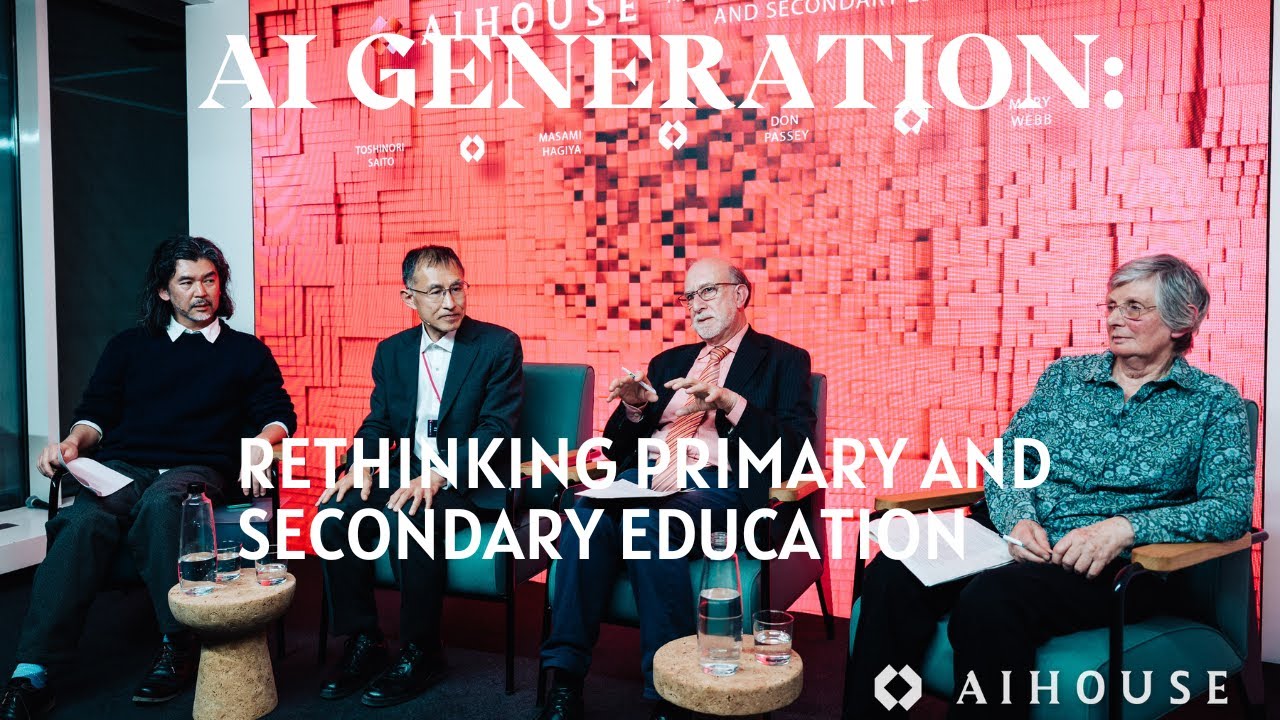
The panel discussion centered on the transformative impact of generative AI on primary and secondary education, emphasizing the need to move beyond viewing AI as a mere tool and to focus on its implications for human agency and dignity. Panelists explored the potential risks of over-reliance on AI, including the erosion of cognitive skills, problem-solving abilities, and intrinsic motivation. A key debate emerged regarding the continued importance of programming education in light of AI's coding capabilities, with some arguing that understanding the underlying principles of informatics remains crucial. The panelists converged on the critical role of teachers in guiding students' use of AI, fostering critical thinking, and ensuring the development of essential human skills such as collaboration and communication. They also highlighted the need to adapt curricula and assessment methods to keep pace with rapid technological advancements. The discussion underscored the importance of balancing the benefits of AI with the preservation of human agency and the cultivation of well-rounded individuals prepared for both technological and societal challenges. Ultimately, the panel advocated for a thoughtful and proactive approach to integrating AI into education, prioritizing the holistic development of students and their ability to critically engage with the world around them. Specific recommendations included encouraging experimentation with AI in the classroom, promoting collaboration among teachers, and focusing on long-term memory and deep learning rather than short-term memorization. The panelists also suggested shifting assessment methods towards oral examinations to better gauge students' understanding and critical thinking skills. The discussion concluded with a call for ongoing dialogue and research to address the ethical and pedagogical challenges posed by generative AI and to ensure that education remains focused on empowering students to thrive in an increasingly complex and technologically driven world.
Panelists
- AI is key to raising productivity in Japan, leading to the need for 'advanced essential workers' with AI literacy.
- Careless AI teaching risks reducing children's agency and dignity; teachers' role is crucial in promoting agency and creativity.
- AI can teach basic knowledge and skills, freeing teachers to focus on fostering agency and creativity.
- Assessing students' outputs (reports) is becoming difficult due to generative AI's ability to produce high-quality content.
- Generative AI is a recent technology that should be regarded as an author, prompting questions about how to regard and work with its outputs.
- Critical thinking and questioning are fundamental skills that need to be promoted in education to evaluate AI-generated content.
- Education should prepare children for society and working with other people, not just for technological environments.
- Productive output from learning should focus on long-term memory, not just working memory, to enable questioning and criticality.
- AI is important for solving global problems and is already used in education, such as language learning programs.
- There are risks to students' cognitive development and agency if they become over-reliant on AI.
- Students need to develop cognitive skills, understanding of key concepts, and the ability to critically evaluate AI outputs.
- Students may lose problem-solving capabilities, confidence in their own thinking, and motivation to learn if AI is overused.
Main Discussion Points
- The role of AI in primary and secondary education.
- The need to move beyond viewing AI as just a tool and focus on human agency and dignity.
- The potential risks of AI to children's cognitive development and agency.
- The importance of teachers in guiding students' use of AI and fostering critical thinking.
- The changing landscape of assessment in the age of generative AI.
- The need to balance the benefits of AI with the development of essential human skills.
- The importance of informatics and programming in understanding AI.
Key Insights
✓ Consensus Points
- The importance of critical thinking and questioning skills in evaluating AI-generated content.
- The crucial role of teachers in guiding students' use of AI and mitigating potential risks.
- The need to balance the use of AI with the development of essential human skills, such as problem-solving, collaboration, and communication.
- The importance of long-term memory and deep learning over short-term memory and rote memorization.
⚡ Controversial Points
- Whether programming is still necessary in education given generative AI's ability to write code.
- The extent to which education should focus on preparing students for technological environments versus broader societal roles.
🔮 Future Outlook
- Curricula will need to adapt every 18-24 months to keep pace with rapid technological changes in AI.
- Assessment methods may shift towards oral assessment.
- Generative AI systems may evolve to generate questions rather than just answers.
- The need to prepare for the potential for AI to do so many things that humans may question the value of their own efforts.
💡 Novel Insights
- The concept of 'advanced essential workers' with AI literacy as a key goal for education in Japan.
- Framing generative AI as an 'author' to encourage critical evaluation of its outputs.
- The idea of productive struggle and productive failure as essential components of the learning process.
- Using AI to simulate historical figures (e.g., Marie Antoinette) to teach historical evaluation and critical thinking about AI.